Showing posts with label technology. Show all posts

Monday, April 30, 2012

Houston Museum of Natural Sciences outing

I dropped by Houston Museum of Natural Sciences this weekend. But perhaps more importantly, Saturday morning I went out of the loop! I live inside the loop and rarely venture out. I was out for the first time since... spring break when I drove people to the airport. That's about two months living inside the loop. Whoa.

Since I'm on my No Spend Month, I parked on campus and walked over to the museum. I didn't mind too much because the scenery en route was beautiful.

Sam Houston statue
The Reflecting Pool
I wandered around the museum. I liked the Wildlife Exhibits because there is no other way we would actually observe these scenes in real life. The animals would run away three miles before we got there. Many of the animals were donated from zoo's... which made me picture zoo's as stuffed animal factories. Look at this Circle of Life in action.

I made my way to the Gems and Minerals, where I actually recognized and appreciated the minerals and gemstones displayed (thanks Petrology!). I went inside the Gem Vault (probably the most popular exhibit here- so many ladies ooh, aah-ing). The jewelry pieces were beautiful, but I thought it was fascinating that these gemstones- rocks, really- have no intrinsic value. Humans have arbitrarily assigned them to have value, mean something, cost $$$$.

My favorite exhibit was the Energy Hall especially the Geovator. We went down 7,000 underground into an oil well with a guide! I learned what fracking is (Hello, I was down there when they used it- boom!) and learned a bunch of interesting information I never thought about (How do we find oil? What does it look like when we drill into it? How do we get oil out?).

I feel I have come in a full circle. About a year ago, Lo and I went on a field trip here. I had decided to take a gap year but had no definite plans. By the time I came back from the field trip, I had a job.

Look at this shirt- I want. This reminded me of the "dinosaurs find life's meaning" cartoon I wrote about a while back.
Yikes....

Wednesday, September 14, 2011

onward to space: norman augustine on campus.

Let me preface this post by repeating a conversation I had over dinner. I told my overachiever friend A that I was going to a talk by Norman Augustine that evening, to which A nonchalantly replied: "Oh yeah, I just had coffee with him. He said really interesting things about innovation." Um, you don't just "have coffee" with Norman Augustine, but A really had- he had been invited as an undergraduate engineering major representative, spending an afternoon chatting with Norman Augustine. He needs to put that on his resume (if there is any space, Apie-poo).
I packed extra snacks for this looong day at school
After some much-needed catching up, I walked into the lecture I had been anticipating all week. Norman Augustine, the name itself inspires awe and respect from those even remotely interested in space exploration. Augustine is (among many, we need to start somewhere) former CEO of Lockheed Martin, head of the Advisory Committee on the Future of United States Space Program, former chairman of the American Red Cross, and more recently, chairman of the Review of United States Human Space Flight Committee. He holds many roles- professor, engineer, businessman, and CEO.

A towering figure, engaging the audience with his interesting stories
Augustine talked about the history of U.S. space exploration, peppering his talk with funny stories. He spoke about the time when he entertained kindergarten kiddos by having them ask questions on the phone to Buzz Aldrin (he has Buzz Aldrin's phone number!- but should I be surprised?) only to find out later that the kids thought they had been talking to Buzz Lightyear. He noted how fast space travel has been evolving, noting that his mother had been ten when the Wright brothers flew their first airplane and in her lifetime she met astronauts that had traveled to the Moon.

He spoke about balancing humans and robots on spaceships, because although robots can be reliable in dangerous situations, they cannot make spontaneous judgments in novel situations as well as humans can. Much of the focus now seems to be on Mars (Moon may be shoved aside as "been there, done that"). Some of the major problems about humans on Mars may be the potentially dangerous galactic cosmic rays and delayed communication with Earth (may take up to 20 minutes, compared to three seconds on the moon. Ugh, speed of light).

Space exploration may be "something just worth doing, not put a price on".
One thing I found interesting was his attempt at justifying the huge amount of public money we put into space exploration. Dr. Augustine made a bold statement which was questioned later during the Q&A session, that he would choose to explore space with money that could have been used to cure cancer, if it was such a choice. Dr. Augustine admitted that in making this decision he was "reluctant but convinced is correct". He noted that however, this is not the correct way to phrase a question, that we need to consider instead the efficiency of that extra dollar put into either programs.

The role of the space program, beyond its immediate benefits of improved technology and unraveling the mysteries of the universe, may be that it serves as an inspiration for young scientists and engineers. I was somewhat surprised to find that someone rational would choose such an abstract reason to support space exploration- I expected graphs and expected returns to investments charts- but maybe there is a huge benefit of the space program that is hard to quantify.

He ended his talk reminding us of the importance of establishing a "sustainable" plan that can last through multiple presidents, changing Congress, and shifting economies.

A great evening spent in the company of great thinkers. Our auditorium was the fullest I'd ever seen, and there were many people from the Johnson Space Center. I was reminded that I live in Houston, Houston!, as in "Houston, we have a problem."

Thursday, July 14, 2011

How to guess someone's age.

I used to be intrigued by the carnival booths where they offer to guess your age or your weight within some reasonable margin of error. For me, it was more about gauging how old or how heavy I was perceived to be, rather than getting that free Teddy bear.

Now that I've turned twenty-two and magazines tell me this is a good time to begin my anti-aging, anti-wrinkle regimen(before it's too late!), I am intrigued by this cultural obsession of masking your age. The national obsession with looking younger- housewives with regular Botox appointments, "lifting" everything there is to lift, and dressing like your teenage daughter- does not seem appealing to me. I think there is some joy to be derived from acting and looking your age, to be proud of your life accomplishments and days you've lived through. It may be because I grew up in Korea where age indicates wisdom and naturally draws respect from those younger than you.

Anyhow, how do those carnival guessers estimate your age? It seems to be more of an observation game. They look at the crowd your are with- your kids or parents or friends may give your age away. They also observe the way you speak, the way you carry yourself, or the clothes you are wearing. One thing I found interesting is that the carnival workers will guess the women's age on the lower side, because after all, they are more likely to be offended by the suggestion that they look older even in a silly carnival game meant for laughs.

Your face does go through predictable changes through time. In your 20's, you may see lines in your brows and start seeing "crow's feet", wrinkles around the eyes. As you progress to your 30's, these lines may be more prevalent, and lines(called "11's") may appear between your brows. In your 40's you can expect to see lines around upper lips, forehead, and crows. Onto your 50's, 60's, and beyond, the fat beneath the skin continues to decrease, making those wrinkles and lines deeper while your face may droop downward. This WebMD article discusses the treatments you can consider in each age frame.

 The ultimate age-proof celebrity: Jennifer Aniston. Picture Source

Correspondingly, Dr. Thomas S. Huang at University of Illinois has developed an age-estimation softwareThe paper which appeared in IEEE transanctions on Image Processing discusses this program which can process images to determine someone's age. This program may be used to collect consumer data- what age group frequents this restaurant at this time frame on Thursdays, or who comes into the soap and fragrances store-without jeopardizing personal privacy by collecting only the age information.

Sunday, July 10, 2011

Atlantis- eight and a half minutes into orbit.

Friday morning, I took a quick break from my morning task to watch the launch of Atlantis, the live stream from NASA TV to watch the launch of the final manned shuttle to outer space.
 
I learned 1) It takes eight and a half minutes for the space shuttle to reach orbit- must be some of the longest eight and a half minutes of the astronaut's lives! 2) The weather in not only Florida but also Houston and California matters so that if things go wrong, the contingency plan will be cleared.

We're living through history! I guess it is always true no matter when you are alive, but end of the oldest tabloid newspaper, birth of a new nation ending decades of war, and the possibly-last shuttle launch... I feel alive.

Oh, and let's not forget Harry Potter and the Deathly Hallows- our school is hosting a private early premiere again. I'll be strolling into the theatre to watch HP7-2 at 6:30PM on Thursday- this is the thought that's keeping me going this week.

Tuesday, January 4, 2011

zappp laser pointers.

I gave a big presentation for one of my classes this semester and had to use a long wooden stick to point to my slides since I couldn't find a laser pointer. When I came home, Umma presented me with my very own laser pointer, which I promptly played with for the next three days. I pointed at the buildings across the street, on the walls, on trees, and at little objects all over the house, fascinated.

I was amazed that I had this great weapon/tool in my hand because wait, wouldn't it be dangerous if I were to aim it at, say a building far away, or a helicopter or even an airplane? I was surprised that laser pointers are completely legal in the U.S. considering how incredibly annoying these can be, when someone is pointing on you in the library and you have no idea who or where, and how potentially dangerous these are...

 Staring at Car Staring at Cat Staring by Steve Bishop,
 if you've ever seen/taken a picture of a cat in the dark.

Currently, laser pointers are banned in New South Wales of Australia, and a laser assault can lead to 14-year-imprisonment. In the U.S. there is an ongoing debate on whether laser pointers should be banned following several incidents where laser pointers were pointed at aircrafts, temporarily blinding the pilots. This is obviously a bad idea to blind someone who is controlling a metal weighing hundred tons in the air, and you can be traced back to pointing the laser. 

Lately in the news, a man in Winter Park, Florida was sentenced with 20 years(!) in prison for pointing his laser at a helicopter. Over this weekend in Fort Myers, two teenagers shone light on a sheriff helicopter, damaging the officers' eyes (ruptured blood vessels), committing a second degree felony. In one (another Florida) case in 2005, a man aiming a laser pointer at deputies was shot on suspicion he was using a laser-sighted weapon.

It's like I have this potential felony/arrest/imprisonment weapon in my hands! I promise to use this only for good and educational/demonstrative purposes.

In other news, I have been playing mom, helping little bro with homework and school projects, and waking up at 6:45 to take little bro to school & packing his lunch (with meticulous detail on how to spread the mustard and how many slices of meat)...

Tuesday, October 5, 2010

you made a mistake.... doctor.

I went to a Scientia lecture by Dr. Vimla Patel this afternoon. The talk was titled: "Failure to Detect Medical Error: Debunking the myth of the Infallible Expert". Dr. Patel is a biomedical informaticist at UTHSC who studies medical errors.

While the talk was fascinating (an hour went by so fast!), certain points Dr. Patel made really captured my attention. While we accept mistakes as normal and human, when experts make such errors, we may not be as forgiving. Especially in this case, when the expert is a physician whose mistake may affect someone's health/body/life, mistakes are considered an anomaly never to be repeated.

She spoke about the different studies conducted to observe mistakes, detection and correction, and her approach to studying this was fascinating. She had a graph starting with on-paper experiments where residents/students are asked to evaluate a case, then "in vivo" studies where a team having a dialogue was observed, unaware that it was a simulated experiment. Then, of course, there were in situ studies where specific doctors were followed and recorded to detect their mistakes. She mentioned that they are developing virtual experiments to fill in the gaps between the different "realistic" experiments.

She also mentioned that mistakes may not be mistakes, something I took further as an advice on life than on this limited topic alone: there are always uncertainties and unknowns in a situation, and we may do the best we can, but the environment we were in may not have been complete. 

Wednesday, August 25, 2010

shotgun sequencing is...

This is going to be a short post because I have to go to bed in preparation for my 8AM class tomorrow(wheeee), but I'm taking this bioinformatics course under the stat department, where we learn how the immense amount of data has been organized to be study-able.

I found this description of shotgun sequencing, which is so concise and easy to understand:
Before any analysis of a DNa sequence can take place it is first necessary to determine the actual sequence itself, at least as accurately as is reasonably possible. Unfortunately, technical considerations make it impossible to sequence very long pieces of DNA all at once. Instead, many overlapping small pieces are sequenced, each on the order of the 500 bases (nucleotides). After this is done the problem arises of assembling these fragments into one long "contig". One difficulty is that the locations of the fragments within the genome and with respect to each other are not generally known. However, if enough fragments are sequenced so that there will be many overlaps between them, the fragments can be matched up and assembled. This method is called "shotgun sequencing.
- Statistical Methods in Bioinformatics by Ewens and Grant

How easy and simple is this description? Non-biology people are sure to be able to pick it up and understand this explanation. I didn't fully understand the concept of shotgun sequencing from textbooks until recently. This is how I want to be able to present science to others.

Tuesday, July 20, 2010

flying just gets harder.

Here's the real reason why I didn't fly home. Airport full body scanners.


There are currently a little more than a hundred scanners in place, and about a thousand to be installed. You can refuse to walk through a body scanner, but you'll have to go through a metal detector plus a pat-down. You might even be accused of being "unpatriotic". Wall Street Journal

Last month, a TSA employee walked through the scanner during a training which prompted a teasing from his co-workers about the size of his manly parts. He attacked his colleague who consequently suffered bruises and cuts, and was arrested with assault charges. Huffington Post

At London's Heathrow Airport, a month after full body scanner was put in place, the first sexual harassment complaint was filed. After a woman walked through the scanner, an employee supposedly said "love those gigantic _". Gulp.  There are now "Flying Pasties" for sale, where you put orange stickers over your private parts.

There's also concerns about harmful effects of radiation. A study by Dr. David Brenner at Columbia University found that the scanners may cause an increase in basal cell carcinoma (a sort of a skin cancer), especially in individuals who are genetically susceptible to DNA damange.

Here's a fun quote by Jon Andler, head of the Federal Law Enforcement Officers Association, in response to concerns regarding invasion of privacy: "I think a bomb detonating on a plane is the biggest invasion of privacy a person can experience."

Monday, May 24, 2010

BP oil spill ill

This might be the biggest oil disaster of our history yet. Due to the leak unable to be stopped, 5,000 barrels of oil (or more) are spilling out to the Gulf of Mexico every day.

So far, several methods have been attempted to try to stop the leak, but these are only temporary measures including setting the oil on fire (scariest, ocean is on FIRE), using dispersants to break apart the oil (unknown if totally safe yet), using a well to siphon the oil (not that effective).


From U.S. Coast Guard
 In this new method BP is trying next week, viscous liquid will be poured into the leak to stop the oil flow and the leak will be sealed with cement.
http://cnn.com/video/?/video/us/2010/05/21/mattingly.bp.top.kill.cnn

You can also watch the oil spill live at:
http://globalwarming.house.gov/spillcam
(Warning: It's frustrating to watch the vast amounts of oil pour out out out into the ocean.)


Heard on NPR. Tom Hutchings, an environmental consultant says, in response to BP saying that the oil spill is tiny compared to the vast ocean,
"If a BP exec wants to call something tiny, call the effort tiny."

Sunday, April 18, 2010

meat without a victim

I am always amazed when I come upon vegetarians because personally, I cannot imagine eating a good steak every once in a a while (My veal chop yesterday was delicious, mmm). Most vegetarians choose to be vegetarian because they cannot imagine eating something that has once been alive. How about if this meat in question had never been alive and purely created for consumption?


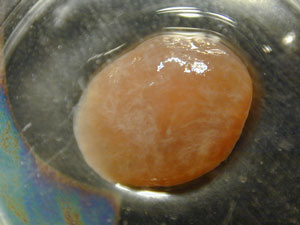
In this project by the Tissue Culture and Art Project at University of Western Australia, skeletal muscle was grown in polymer from prenatal cells. The growing "meat" was displayed in the art exhibition L'art Biotech in Nantes, France in March of 2003. This experiment ended in a feast of the grown meat. Think this sounds delicious? I wouldn't steak my life on it from the way it looks.

Read more about this project here: www.tca.uwa.edu/au/disembodied/dis.html
This lab also has other rare interesting projects such as making leather, and a growing human ear. I had planned on taking tissue culture this summer which fell through unfortunately. Not taking tissue culture might be a misteak!

Thursday, March 18, 2010

How to get up after a fall: Tylenol in 1982

In September of 1982, seven people died after taking Extra-strength Tylenol that had been laced with cyanide. The market share of Tylenol plummeted from 37% to 8%.


(picture from consumerist.com)

Johnson and Johnson dealth with this incident very wisely. First of all, it issued an immediate recall of its products off the markets suffering a loss of $100 millions dollars. Second, it introduced a tamper-evident seal packaging as the first pharmaceutical company to comply with FDA's packaging guidelines. This combined with special offers and a new advertising campaign, Johnson and Johnson was able to make a comeback and is now one of the most respected companies in the world.